A fully immersive virtual reality and psychiatric rehabilitation experience: An innovative intervention for mental health
Alessandra Perra, PhD, Researcher and Principal Investigator - Psychiatric Rehabilitation Technique, Department of Medical Sciences and Public Health, University of Cagliari, Italy
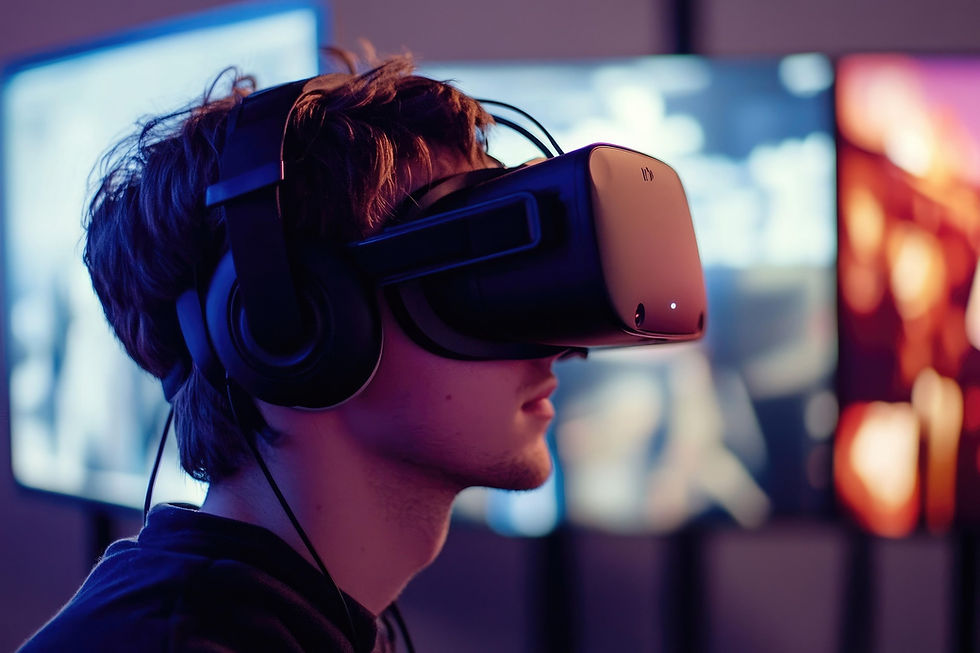
Cognitive Remediation (CR) has been shown to be a robust and beneficial therapy for those with a diagnosis of schizophrenia. However, its effectiveness in mood disorders, including bipolar disorder (BD), while promising, remains limited by challenges. In particular, studies conducted in BD populations indicate that the generalization of cognitive gains to everyday functioning is still limited, and attrition rates can be high, potentially due to mood-related and temperamental characteristics. One potential avenue for improving both engagement and generalization is to make tasks feel more like real life by providing immersive Virtual Reality (VR). This can create highly interactive and realistic environments and could be an important next step in the field of cognitive rehabilitation.
The University of Cagliari research group has tested a fully immersive VR-based CR. The intervention consisted of 24 biweekly sessions, with people with Bipolar Disorder being randomized to either VR-based CR or a waiting list. Participants randomized to receive VR-based CR took part in simulated everyday scenarios (e.g., home and urban environments), and this was combined with relaxation, psychoeducational modules, guided reflection on problem-solving strategies, and take-home assignments to support the transfer of skills to real-world activities.
We found that participants engaged successfully in this new form of cognitive remediation (VR-CR), with few people dropping out. Although this was a study in a small sample, those engaging with VR-CR significantly improved their memory, attention, verbal fluency, and executive functioning (p = 0.003). They also showed reductions in depression symptoms and an enhanced emotional awareness. Some of these changes were still evident at 6 and 12 months after the intervention. In particular, most cognitive gains remained stable or continued to improve, except for visuospatial and executive functions.
VR technology was highly engaging for patients—who reported feeling active agents in their recovery—and enabled clinicians to personalize interventions in realistic settings. What is needed next is a larger study to disentangle the effects of the different therapy components or to understand the effects over time in a larger group of people with bipolar disorder.
Read more more about these findings the research team's peer-reviewed publications:
Perra et al. (2023). A Recovery-Oriented Program for People with Bipolar Disorder through Virtual Reality-Based Cognitive Remediation: Results of a Feasibility Randomized Clinical Trial. Journal of Clinical Medicine, 12(6), 2142. https://doi.org/10.3390/jcm12062142
Perra et al. (2025). An Integrated Cognitive Remediation and Recovery-Oriented Program for Individuals with Bipolar Disorder Using a Virtual Reality-Based Intervention: 6- and 12-Month Cognitive Outcomes from a Randomized Feasibility Trial. Behavioral Sciences, 15(4), 452. https://doi.org/10.3390/bs15040452

Comments